
Home Nursing Services vs Home Care Services – What’s the Difference?
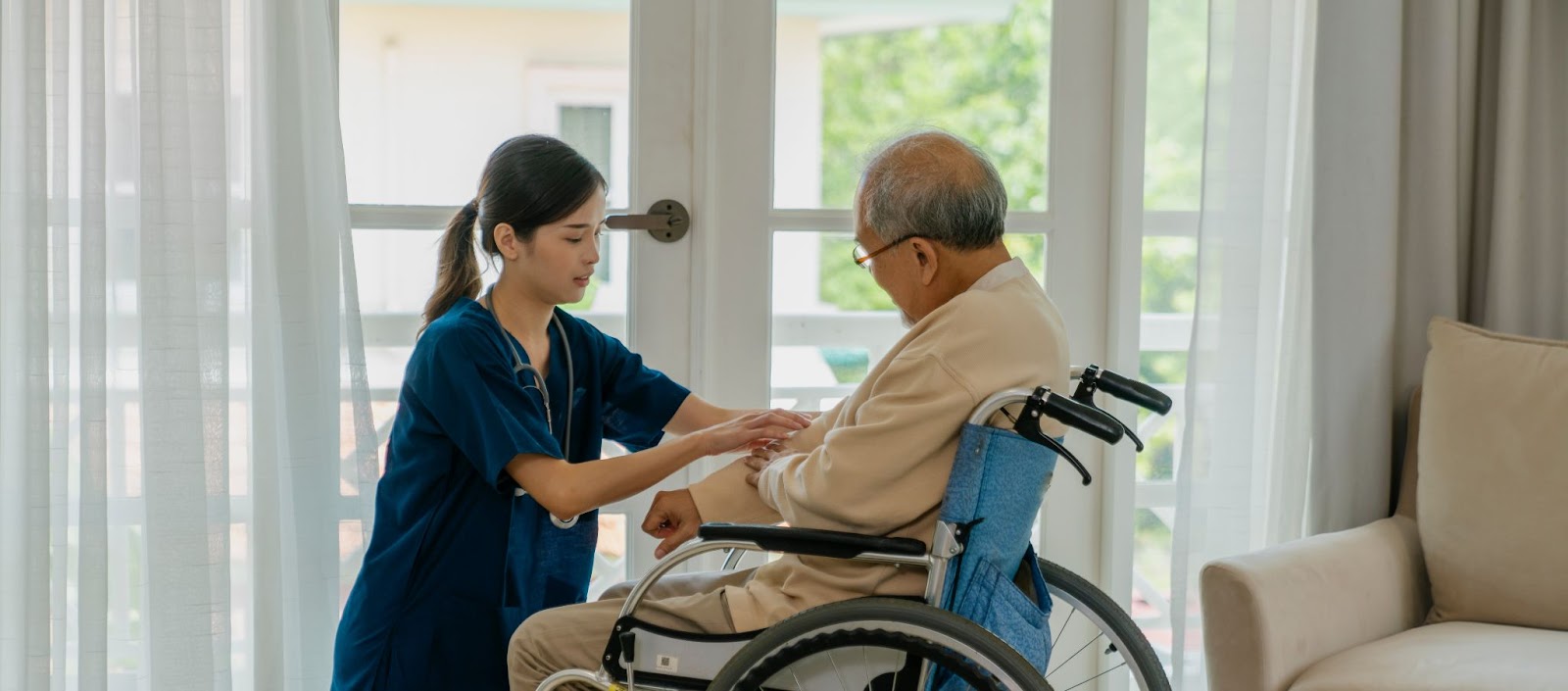
Many families in Singapore are unsure about the difference between home care vs home nursing. As more seniors choose to age at home, the demand for reliable home-based care continues to grow.
Understanding the different levels of support available is very important. It can help families make better-informed decisions for their loved ones.
Home Care vs Home Nursing
Both home care and home nursing fit into home-based support.
Home care refers to non-medical support services. They are provided to both ill individuals and individuals with functional limitations for self-care in their own homes to help them manage daily life safely and comfortably.
It focuses more on assistance and supervision instead of providing medical treatment. Home care can be provided by trained individuals, such as caregivers or healthcare assistants, to assist in daily activities.
Home care typically covers areas like:
1. Helping Patients with Bathing, Dressing, and Grooming
Caregivers assist with personal hygiene and daily grooming. This is to help the individuals to stay clean, comfortable, and confident, especially when mobility is limited.
2. Meal Preparation and Feeding
Caregivers prepare balanced meals based on the individual’s dietary needs. Not only that, they also provide feeding assistance for those who have difficulty eating independently.
3. Mobility and Transfer Assistance
Support is given when moving around the home, getting in and out of bed, or transferring between chairs and wheelchairs to reduce the risk of falls and injuries.
4. Light Housekeeping
Basic household tasks such as cleaning, laundry, and organising living spaces are handled as well. This is to maintain a safe and comfortable environment for the individual.
5. Companionship and Emotional Support
Caregivers provide friendly interaction, conversation, and emotional reassurance to individuals. This is to reduce loneliness and promote mental well-being.
6. Medication Reminders (Not Administration)
Caregivers remind individuals to take their prescribed medications on time. Only helping them maintain their treatment routine without providing any medical administration.
7. Basic Safety Supervision
Continuous monitoring is provided and it is one of the most important support. This is to ensure the individual’s safety, identify potential risks, and respond quickly in case of emergencies.
Home nursing refers to professional medical services. This service is usually provided by registered and qualified nurses in an individual’s home. It is designed to support patients who require clinical treatment, health monitoring, and specialised medical attention. In short, home nursing focuses on medical management and recovery under proper professional supervision.
Home nursing typically covers areas like:
1. Health Monitoring and Assessment
Registered nurses regularly check vital signs, monitor symptoms, and assess overall health conditions to detect changes early.
2. Medication Administration
Nurses safely administer prescribed medications, including injections and intravenous treatments, according to doctors’ instructions.
3. Wound Care and Dressing
Professional wound cleaning and dressing are provided to promote proper healing and prevent infections.
4. Tube Feeding and Catheter Care
Nurses manage nasogastric tube feeding, urinary catheters, and other medical devices to ensure proper function and hygiene.
5. Post Surgery and Recovery Support
Specialised nursing support is given to patients recovering from surgery or medical procedures to support safe and smooth healing.
6. Chronic Condition Management
Ongoing care is provided for long-term conditions such as diabetes, stroke, or heart disease, helping patients maintain stable health.
7. Medical Reporting and Coordination
Nurses document health progress and communicate with doctors and healthcare providers to ensure continuity of treatment.
The Benefits of Home Nursing and Home Care Services

1. Comfort of Staying at Home
Patients receive support in a familiar environment, which helps reduce stress and improves emotional well-being.
2. Personalised Support
Care plans are tailored to each individual’s health condition, lifestyle, and daily needs.
3. Better Recovery and Health Management
Home nursing supports medical recovery. Whereas home care assists with daily routines, helping patients heal and stay stable.
4. Greater Independence
Individuals can continue their daily activities with support, maintaining dignity and self-confidence.
5. Reduced Hospital Visits
Proper home monitoring and care help prevent unnecessary hospital readmissions.
6. Support for Family Caregivers
Families receive professional assistance and guidance, reducing physical and emotional strain.
7. Flexible and Scalable Services
Care levels can be adjusted as health needs change over time.
8. Improved Safety and Supervision
Regular monitoring lowers the risk of falls, complications, and emergencies.
Choosing the Right Level of Care for Your Loved One

In order to choose the right level of care, there are steps that must be followed. Firstly, you need to assess your ill loved one’s medical needs, functional limitations, and the level of assistance that is required for their daily activities. Then, you have to assess the level of support available from your family. Lastly, pick the best long-term care plans that suit both the patient and their family needs.
It is extremely important to understand the difference between home care vs home nursing. This is to avoid common mistakes such as selecting a service based solely on cost or overlooking necessary medical supervision.
A simple self-check can help guide your decision. Consider the complexity of daily tasks, any ongoing health conditions, and the level of professional support required. With this, families can make informed choices that ensure safety, comfort, and consistent care at their own home.
What Support Looks Like At Home with SALOHealth?

When deciding which type of care is most suitable, it helps to consider the specific services available:
1. Home Nursing
Home nursing provides medical care for ill loved ones. Patients with chronic conditions, post-surgery recovery needs, or ongoing health monitoring. This service ensures that medical tasks are managed safely. It will also allow your ill loved ones to remain in the comfort of their own home.
2. Respite Care
Respite care offers temporary support for family caregivers. Respite care support needs range from 4 to 8 hours which is a good interval for care such as support for ADLs, tube feeding, and catheter care. It is to give them time to rest or attend to other responsibilities without compromising the quality of care for their loved one.
3. Caregiver Training
Caregiver training not only teaches family members or anyone with the skills and knowledge that is needed to become one, but it also empowers family members to undertake the position as a caregiver. The teaching provides safe, effective, and compassionate support which improves daily care and overall confidence in caregiving.
The Bottom Line
Families should assess medical needs, available support, and long-term plans to determine whether home care, home nursing, respite care, caregiver training, or a combination of these services will provide the best outcome for their loved one.
At the end of the day, as family members of the ailing loved ones, we would want the best for them, the family and yourself as a whole. If you are not sure on the next step, why not let us help you. Reach out today, we are here to provide guidance and see how we can play a part to ease the burden of your current journey.
Need help with your ill loved ones? Visit https://salo.sg/ or contact us to learn more!